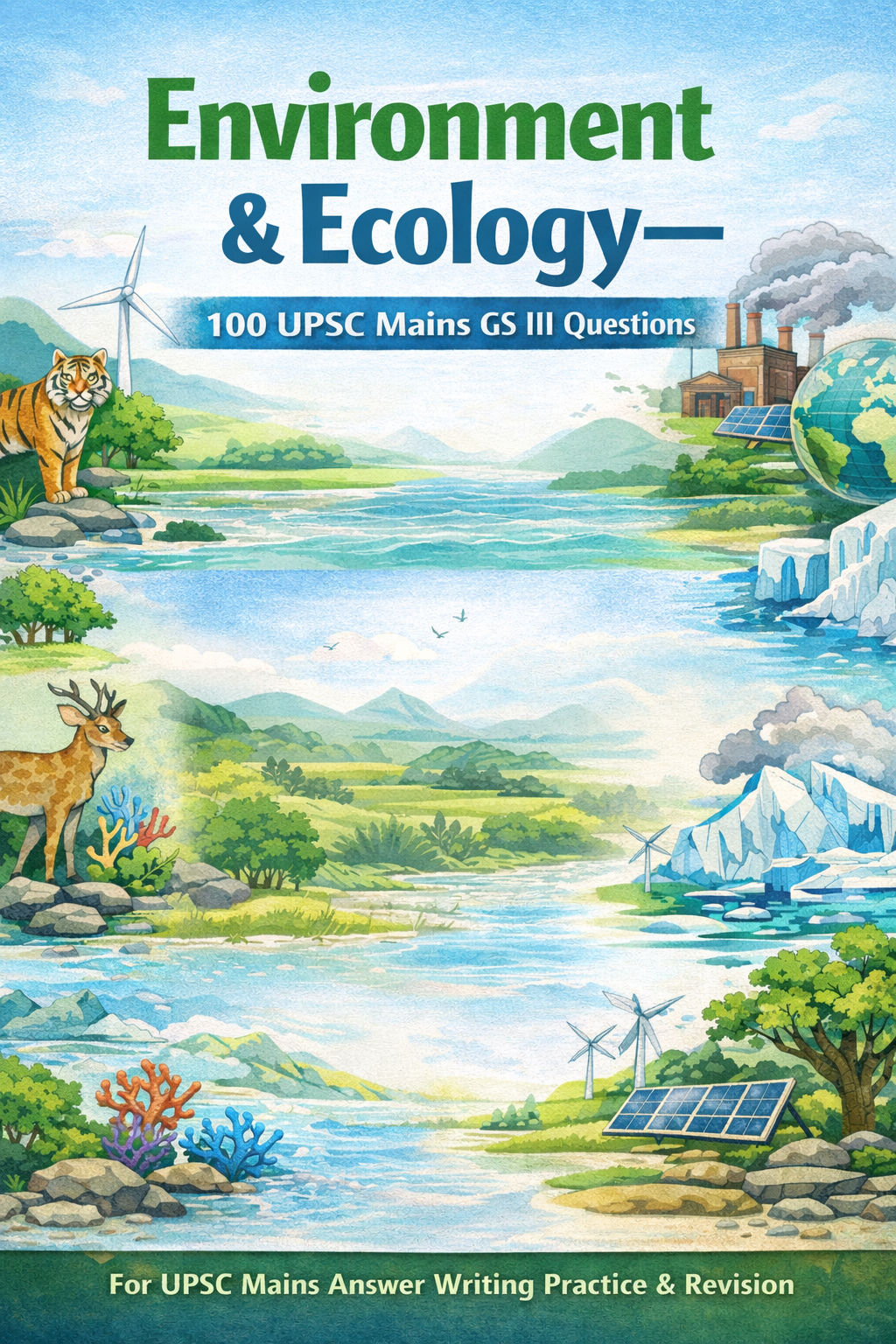
Environment & Ecology has emerged as one of the most dynamic and high-scoring sections in UPSC Mains GS Paper III. Questions are increasingly interdisciplinary—linking ecology with economy, ethics, governance, technology, and international relations.
To help aspirants prepare comprehensively, here is a curated list of 100 Environment & Ecology questions framed strictly in UPSC Mains answer-writing orientation. These questions are useful for daily answer writing, revision, and mock tests.
I. Ecology & Biodiversity
- Explain the concept of ecosystem services and evaluate their role in sustainable development.
- Discuss the significance of keystone species in maintaining ecological balance.
- How does habitat fragmentation affect biodiversity? Suggest mitigation strategies.
- Examine the role of wetlands in flood control and groundwater recharge in India.
- Discuss the ecological importance of mangrove forests with reference to India.
- What are invasive alien species? Assess their impact on India’s biodiversity.
- Evaluate India’s progress in achieving global biodiversity conservation targets.
- Discuss the relevance of biosphere reserves in biodiversity conservation.
- How does climate change threaten coral reef ecosystems?
- Explain ecological succession and its relevance in forest restoration.
II. Climate Change & Global Warming
- Discuss the scientific basis of global warming and its consequences for India.
- Assess the effectiveness of the Paris Agreement in combating climate change.
- What is climate justice? Examine India’s stance in global climate negotiations.
- Analyze the impact of climate change on Indian agriculture.
- Explain the concept of carbon budget and its global significance.
- Discuss the role of Nationally Determined Contributions (NDCs).
- How does climate change influence Indian monsoon patterns?
- Examine the causes and impacts of glacial retreat in the Himalayas.
- Discuss India’s climate change adaptation and mitigation strategies.
- Evaluate the significance of IPCC assessment reports.
III. Environmental Pollution
- Discuss the causes and impacts of air pollution in urban India.
- Analyze the effectiveness of the National Clean Air Programme (NCAP).
- What are microplastics? Discuss their environmental and health impacts.
- Examine groundwater contamination issues in India.
- Explain eutrophication and its consequences.
- Assess challenges in solid waste management in Indian cities.
- Discuss noise pollution as an emerging urban concern.
- Examine industrial pollution and its impact on river ecosystems.
- What is thermal pollution? Explain its ecological implications.
- Critically examine India’s pollution control mechanisms.
IV. Environmental Governance & Laws
- Discuss the role of the Wildlife Protection Act, 1972.
- Examine the importance of Environmental Impact Assessment (EIA).
- Critically analyze recent changes proposed in EIA norms.
- Evaluate the role of the National Green Tribunal (NGT).
- Explain sustainable development with suitable examples.
- Assess community participation in forest conservation.
- Discuss the role of NGOs in environmental governance.
- Evaluate India’s National Action Plan on Climate Change (NAPCC).
- What is green federalism? Discuss centre–state coordination.
- Identify challenges in enforcing environmental laws in India.
V. Natural Resource Management
- Discuss sustainable water resource management in India.
- Examine the issue of groundwater depletion.
- Analyze ecological impacts of large dams.
- Discuss forest conservation versus tribal rights.
- Explain carrying capacity in resource management.
- Assess the role of Joint Forest Management (JFM).
- Discuss the importance of soil conservation.
- Evaluate mineral resource management policies in India.
- What is desertification? Examine its impacts in India.
- Discuss challenges in coastal zone management.
VI. Energy & Sustainable Development
- Discuss the role of renewable energy in climate mitigation.
- Evaluate India’s solar energy potential.
- What is energy transition? Analyze India’s clean energy pathway.
- Discuss environmental concerns related to nuclear energy.
- Examine the role of biofuels in energy security.
- Discuss hydrogen energy as a future fuel.
- Assess environmental impacts of thermal power plants.
- Explain energy efficiency and India’s initiatives.
- Discuss the concept of circular economy.
- Evaluate the role of electric vehicles in emission reduction.
VII. International Environmental Issues
- Discuss the objectives of the Convention on Biological Diversity.
- Examine the role of UNEP in global environmental governance.
- Discuss ozone depletion and the success of the Montreal Protocol.
- Analyze the importance of the Ramsar Convention.
- Discuss transboundary environmental challenges.
- Evaluate global climate finance mechanisms.
- Explain the principle of Common but Differentiated Responsibilities (CBDR).
- Examine the role of international financial institutions in environmental protection.
- Discuss global efforts to combat marine pollution.
- Analyze environmental implications of global trade.
VIII. Contemporary Environmental Issues
- Discuss environmental challenges of rapid urbanization in India.
- Examine causes and consequences of human–wildlife conflict.
- What is the blue economy? Discuss its prospects and challenges.
- Analyze the impact of tourism on fragile ecosystems.
- Examine environmental concerns related to mining activities.
- Discuss climate-induced migration.
- What is greenwashing? Why is it a concern?
- Examine the role of traditional ecological knowledge.
- Discuss environmental risks of infrastructure development in the Himalayas.
- Evaluate India’s disaster preparedness in the context of climate change.
IX. Ethics, Society & Environment
- Discuss environmental ethics in policymaking.
- Examine the link between poverty and environmental degradation.
- Explain the concept of intergenerational equity.
- Analyze gender dimensions of environmental issues.
- Discuss the role of environmental education.
- Examine corporate environmental responsibility in India.
- Discuss major environmental movements in India.
- What is Lifestyle for Environment (LiFE)?
- Discuss ethical challenges in balancing development and conservation.
- Examine the role of media in environmental awareness.
X. Future Perspectives
- Discuss nature-based solutions to climate change.
- Examine the role of artificial intelligence in environmental management.
- Discuss the potential of carbon markets in India.
- Analyze India’s long-term low emission development strategy.
- Explain the concept of planetary boundaries.
- Discuss net-zero emissions and associated challenges.
- Examine rewilding as a conservation strategy.
- Evaluate India’s role in global environmental leadership.
- Discuss the importance of sustainable lifestyles.
- Critically analyze future challenges of environmental governance.
